Kitchen Appliance Planning 101: Choose the Right Size, Features, and Budget
October 5, 2026
The right kitchen appliance is the one that fits your cooking habits, available space, and budget. A restaurant-style range or panel-ready refrigerator can be appealing, but neither is automatically the best choice for your home.
For a remodel, select major appliances before finalizing cabinetry. For replacements, start with exact opening measurements and existing utility connections. Then compare features that solve everyday problems, rather than paying for capacity or configurations you rarely use.
Key Takeaways
Select major appliances before finalizing cabinetry to avoid costly fit and layout compromises.
Match burners, griddles, and oven capacity to your regular cooking habits.
Include installation, refrigerator fronts, handles, and ventilation work in the appliance budget.
Plan hood ducting early and confirm makeup-air requirements with qualified local professionals.
Start With a Kitchen Appliance Plan, Not a Brand
A useful kitchen appliance plan answers three questions: How do you cook, what can your home accommodate, and what can you spend? Resolve these before narrowing your search to particular models.
Cooking habits: How many pans do you use simultaneously? Do you bake, entertain, or regularly make griddle breakfasts?
Space: What opening widths, heights, and depths are available? How much counter and cabinet space can you give up?
Utilities: Is gas available? What electrical connections and ventilation arrangements exist?
Budget: Is your spending limit for appliances alone or the complete installed package?
For example, someone who normally cooks with two pans may value convenient controls more than additional burners. A household that frequently prepares several dishes at different oven temperatures may benefit more from a second oven.
Budget for the complete installation
A kitchen appliance budget should account for more than the purchase price. Ask for an itemized estimate that includes installation, refrigerator panels and handles where applicable, cabinetry changes, and ventilation work.
Built-in refrigeration generally costs substantially more than freestanding options. A decorative hood can also become a significant expense, especially when custom metalwork or cabinetry is involved. Discuss the total budget early so one premium item does not consume money intended for the entire package.
Plan Ventilation Before Finalizing the Layout
Ventilation belongs near the beginning of kitchen appliance selection, not at the end. The cooking location affects the duct route, and changing that route after construction can mean removing drywall and repeating finish work.
Choose a hood at least as wide as the cooking surface, subject to the appliance and hood manufacturers’ installation requirements. A wider hood may be appropriate, but width alone does not determine performance.
Airflow: CFM, or cubic feet per minute, describes airflow capacity.
Duct diameter: An undersized duct can restrict performance.
Duct route: Long runs and multiple bends add resistance and can increase noise.
Makeup air: Higher-capacity systems may require a planned supply of replacement air.
Do not assume a universal makeup-air threshold. Requirements depend on local code and the installation. Have an HVAC professional or local code official confirm what applies, rather than treating an open window as a substitute for a required system.
Choose the Cooking Setup That Fits Your Routine
Gas, conventional electric, or induction?
These are the three main cooking-surface choices, although induction is also electrically powered. Your kitchen appliance decision should consider both heat control and the connections available in your home.
Gas appeals to cooks who prefer a visible flame and physical knobs. The flame provides immediate visual feedback when adjusting heat. Confirm gas availability before designing around it.
Conventional electric is another option when gas is unavailable. Its heated surface can bake spills onto the cooktop, making cleanup an important consideration.
Induction uses a magnetic field to generate heat in compatible cookware. Its attractions include fast heating, responsive control, low-heat cooking, and easier surface cleanup. For supporting information, see ENERGY STAR’s induction cooking guidance.
Two safety distinctions matter: an induction surface can become hot from contact with heated cookware, and a low setting does not guarantee food cannot scorch. Continue monitoring cooking, and do not leave active cooking unattended. Induction also does not eliminate the need for ventilation.
Range versus rangetop versus cooktop
These kitchen appliance terms describe different installation configurations:
Range: Combines a cooking surface and oven in one unit.
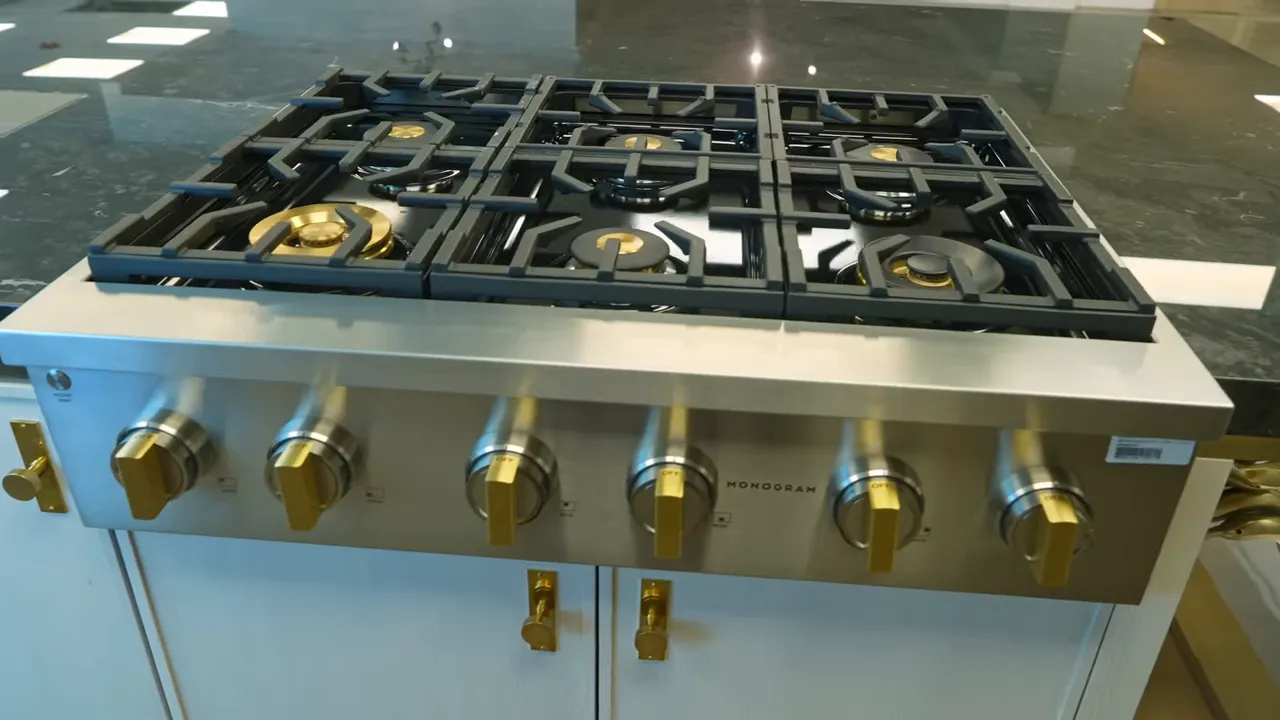
Rangetop: Provides the cooking surface without an oven, typically with prominent front-mounted controls.
Cooktop: Installs into the countertop and does not include an oven.
A range keeps cooking and baking together. A rangetop or cooktop allows separate wall ovens and can leave cabinetry beneath the cooking area, depending on installation requirements.
A rangetop separates surface cooking from the oven and allows cabinetry below.
How large should your range be?
Common choices include 30-, 36-, and 48-inch widths, but burner layouts vary by model. A 36-inch appliance may offer six burners or four burners with a griddle. Larger configurations can include additional cooking features and, often, two ovens.
Bigger is useful only when the extra space supports your cooking. A built-in griddle may be valuable for frequent pancake breakfasts. Extra burners may matter when coordinating several dishes. Both choices take space that could otherwise serve as countertop or storage.
Professional styling is not limited to oversized models. Large knobs, substantial handles, and powerful burners are available across different widths.
Decide How Many Ovens You Will Actually Use
Count oven cavities across your entire kitchen appliance package. A range with two ovens plus a double wall oven creates four cooking cavities, which may suit frequent large gatherings but exceed everyday needs.
A single wall oven can add flexibility without taking as much space as a double unit. Its installation height can also reduce bending compared with an oven beneath a range.
If a range includes a smaller companion oven, check whether your usual pans and dishes fit. That cavity may be sufficient for everyday meals and can heat up faster than the larger oven. Wall ovens, especially heavy double units, should be professionally installed.
Balance Refrigerator Capacity, Appearance, and Cost
Refrigeration is a major kitchen appliance choice because both storage needs and cabinet integration influence the result. Compare these configurations rather than assuming every refrigerator fits a “standard” opening.
Standard-depth freestanding: Generally offers more capacity and lower cost, but projects farther into the room.
Counter-depth freestanding: Creates a shallower appearance, although the doors typically remain beyond the cabinetry.
Built-in or integrated: Offers a more closely coordinated cabinet appearance at a higher price.
Column refrigeration: Provides separate tall refrigerator or freezer units for a customized arrangement.
For panel-ready models, confirm whether fronts and handles are included. Custom panels require coordination with the cabinet supplier and installer. Stainless fronts may also be separate purchases on some models.
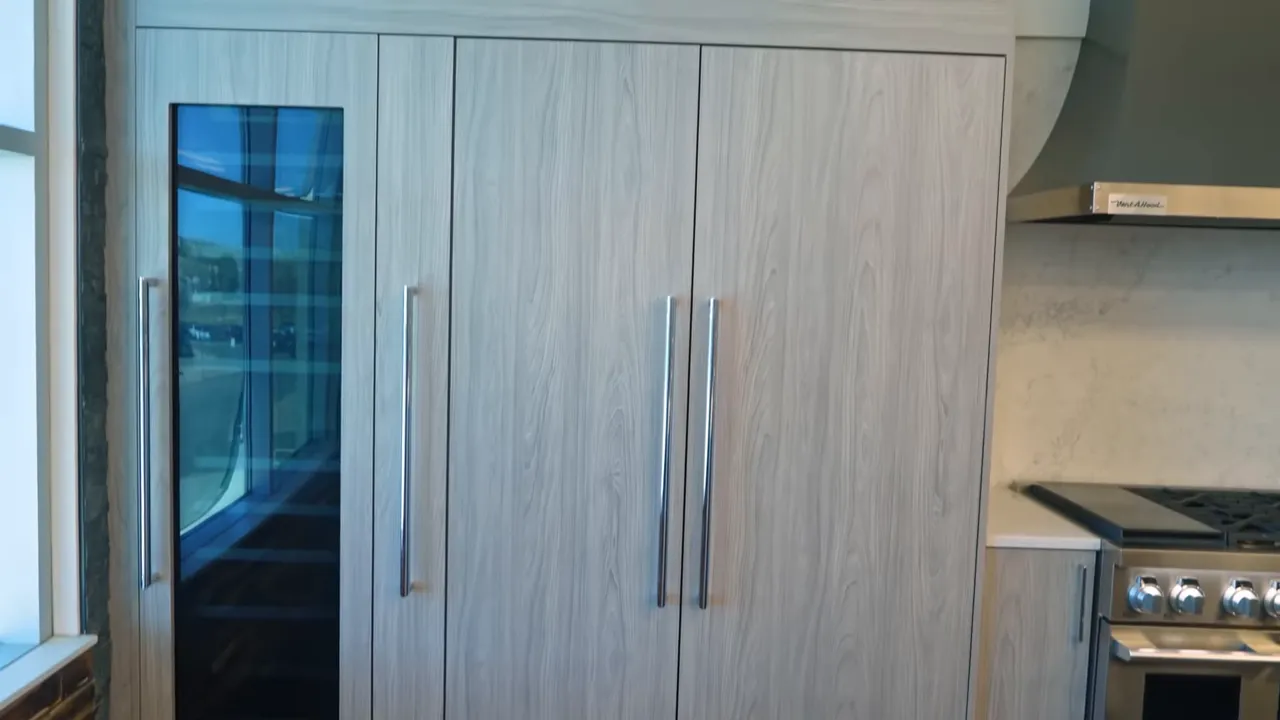
Matching refrigerator panels create a continuous cabinet appearance.
A freestanding refrigerator can still look intentional with a well-designed surround. Discuss deeper side panels or adjusted cabinet positioning with your designer while preserving the required installation clearances.
Kitchen Appliance Shopping Checklist
Bring these details to the showroom before making a kitchen appliance purchase:
Exact opening measurements and the proposed cabinet layout.
Known gas, electrical, and ventilation conditions.
A total installed budget, not just individual price targets.
A short list of essential cooking and storage features.
Questions about panels, handles, oven capacity, and installation requirements.
The most expensive kitchen appliance mistake is often choosing too late. Select models early, share their specifications with your designer and installers, and confirm fit before ordering cabinets. Prioritize the features you will use regularly, then choose the finish and styling that complete the kitchen.
Choosing flooring for your kitchen can feel like one of the toughest decisions in the whole remodel. You find a color you like, then start comparing thicknesses, finishes, plank widths, and installation ...
Kitchen countertops make a big statement, but choosing them involves more than finding a slab you love. The material has to fit your household, the price has to fit your budget, and ...
We use cookies to improve your browsing experience, analyze site traffic, and serve personalized content.
By clicking “Accept,” you consent to our use of cookies as described in our
Cookie Policy.